
If your child recently received an autism diagnosis—or if you’ve been advised to explore behavioural supports in Ontario—you likely have a lot of questions.
You might be asking yourself: What actually happens in ABA? Will it help my child with daily life? And most importantly, is it the right fit for our family?
In Short: Applied Behaviour Analysis (ABA) helps your child by identifying why certain behaviours or frustrations happen and teaching practical, real-world skills to adapt or replace them. At Lake Ridge Community Support Services (LRCSS), our goal is never to change who your child is or force them to conform. Instead, we give your child the communication tools, coping strategies, and confidence they need to thrive in a world that wasn't always built for them.
Here is a clear, plain-language look at how evidence-based ABA supports your child’s development and everyday family life.
3 Key Areas Where ABA Helps Your Child
ABA is not a rigid, one-size-fits-all program. It is an individualized framework used to break down big goals into manageable steps, adapt environments, and build skills that matter to your family.
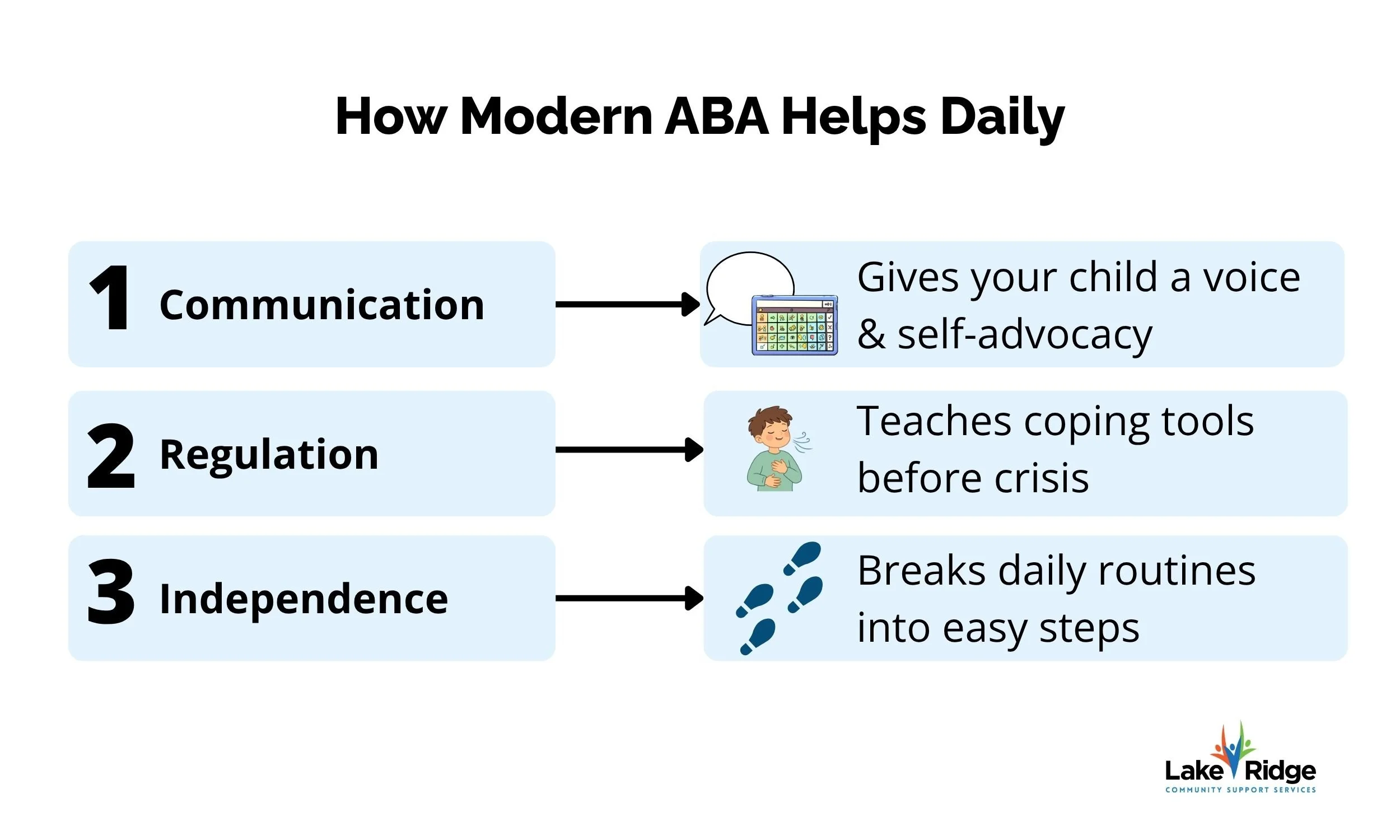
1. Functional Communication & Self-Advocacy
When a child doesn't have an easy way to express distress, sensory overload, or simple wants, frustration builds quickly. Often, meltdowns, screaming, or unsafe behaviours are simply a child's only available way of saying, "I'm overwhelmed," or "I need help."
How ABA Helps: Clinicians use Functional Communication Training (FCT) to teach your child a reliable way to communicate what they need. This might be vocal words, picture communication (PECS), a speech-generating AAC device, or gestures.
The Real-World Impact: Your child learns that their voice has immediate power. They learn how to request breaks, ask for preferred items, and say "no" or "stop" safely—reducing daily meltdowns by addressing the root cause.
2. Emotional Regulation & Co-Regulation
Navigating unexpected changes, noisy environments, or waiting for a favorite toy takes a lot of cognitive and sensory energy.
How ABA Helps: Using Antecedent-Based Interventions, clinicians look at what triggers distress in your child's environment and make proactive adjustments (like visual schedules or timers). We also teach children how to recognize internal body cues using simple visual tools during calm moments, pairing them with practical coping strategies like taking a break or using sensory tools.
The Real-World Impact: Instead of reaching a point of total overload, your child builds the skills to recognize when they feel overwhelmed and use coping strategies or ask for help from a trusted adult.
3. Independence in Daily Living Skills (ADLs)
Everyday tasks—like toothbrushing, toilet training, getting dressed, or going to the grocery store—involve many sensory inputs and multi-step directions that can feel exhausting for a neurodivergent learner.
How ABA Helps: Through Task Analysis, complex routines are broken down into small, step-by-step micro-goals. Clinicians use Prompt Fading to offer hands-on or visual support at first, then systematically fade that support as your child gains confidence.
The Real-World Impact: Your child builds true, lasting independence in daily habits at a pace that feels comfortable for them, taking the stress out of morning and bedtime routines for your whole family.
Evidence-Based Frameworks That Drive Success
Quality ABA relies on proven, scientifically validated strategies to ensure every goal is taught with care, respect, and accuracy. Some of the core frameworks we use include:
| Strategy | How It Works | Why It Helps Your Child |
|---|---|---|
| Behavioral Skills Training (BST) | A structured 4-step learning loop: Instruction → Modeling → Rehearsal → Feedback. | Gives children a safe, predictable way to practice new social, safety, or life skills through roleplay and immediate encouragement. |
| Naturalistic Teaching Strategies (NET) | Embedding learning opportunities directly into natural play and self-chosen interests. | Learning feels like play. Children stay engaged because goals are built around things they already love. |
| Assent-Based Practice | Continuously checking for the child's willingness to participate using verbal and non-verbal cues. | Ensures your child feels safe, respected, and in control. If a child signals they need a break, we listen and adapt. |
Why Families Trust Lake Ridge Community Support Services (LRCSS)
When choosing a service provider in Ontario, you want to know that your child is in experienced, compassionate hands. Here is what sets LRCSS apart:
Over 40 Years of Community Care: For four decades, LRCSS has been a trusted non-profit resource for neurodivergent individuals and families across Durham Region.
Unmatched Clinical Oversight (41 RBAs): Applied Behaviour Analysis in Ontario is a regulated health profession under the College of Psychologists and Behaviour Analysts of Ontario (CPBAO). LRCSS houses 41 Registered Behaviour Analysts (RBAs), ensuring your child's care is designed and monitored to the highest provincial standards.
A Non-Profit, Family-First Mission: As a community non-profit, our focus is entirely on your child’s quality of life—never on profit margins or selling unnecessary hours.
Assent & Autonomy First: We practice 100% assent-based therapy. We believe learning only happens when a child feels happy, relaxed, and safe.
Comprehensive Community Programs: From 1-on-1 individualized therapy to entry-to-school programs, teen social groups, and caregiver coaching, we partner with you at every stage of your child's journey.
You Don't Have to Figure It Out All at Once
Navigating diagnosis, funding options like AccessOAP, and therapy plans can feel overwhelming. But remember: you don't need to map out the next ten years today.
ABA is simply a tool to help your child communicate their needs, build self-advocacy, and reach their full potential—on their own terms.
Still not sure what’s next?
Book a call with our Service Navigator. We’ll explain your options or help you schedule a Brief Targeted Consultation with a team member to help you tackle a specific issue.