
No Tears, All Treats: A Parent’s Guide to Sensory-Friendly Halloween Costumes
For many neurodivergent kids and children with sensory sensitivities, traditional Halloween costumes are a minefield. Itchy tags, stiff synthetic fabrics, suffocating plastic masks, and heavy face paint can transform a night of excitement into absolute sensory overload.
The good news? Your child doesn’t need to suffer to celebrate. Whether you choose to BUY, DIY, MODIFY, or DESENSITIZE, here is how to navigate a meltdown-free Halloween in Ontario's Durham Region.
1. BUY: Sensory-Friendly & Adaptive Costumes

You don't need to build every outfit from scratch—retailers are increasingly stocking sensory-conscious and adaptive options directly in Canada:
Character Pajama Sets & Union Suits: Swap a restrictive costume for 100% organic cotton, tagless sleeper sets or 1-piece footless union suits. They look like full costumes (skeletons, superheroes, pumpkin sets) but feel like everyday sleepwear.
Official Adaptive Costume Lines: Major character costumes (like Spider-Man, Buzz Lightyear, or Disney Princesses) now come in specialized adaptive designs featuring flat seams, hidden abdominal access flaps for feeding tubes/ports, and soft lining.
Soft Fleece Onesies: Oversized animal onesies (dinosaurs, pandas, dragons) slip directly over your child’s comfortable base clothing without tight elastic waistbands or itchy necklines.
Graphic Costume Tees: Simple cotton t-shirts printed with tuxedo designs, superhero crests, or skeleton ribs give the visual impression of a costume with the exact weight and texture of a regular shirt.
2. DIY: Low-Stress Home Builds
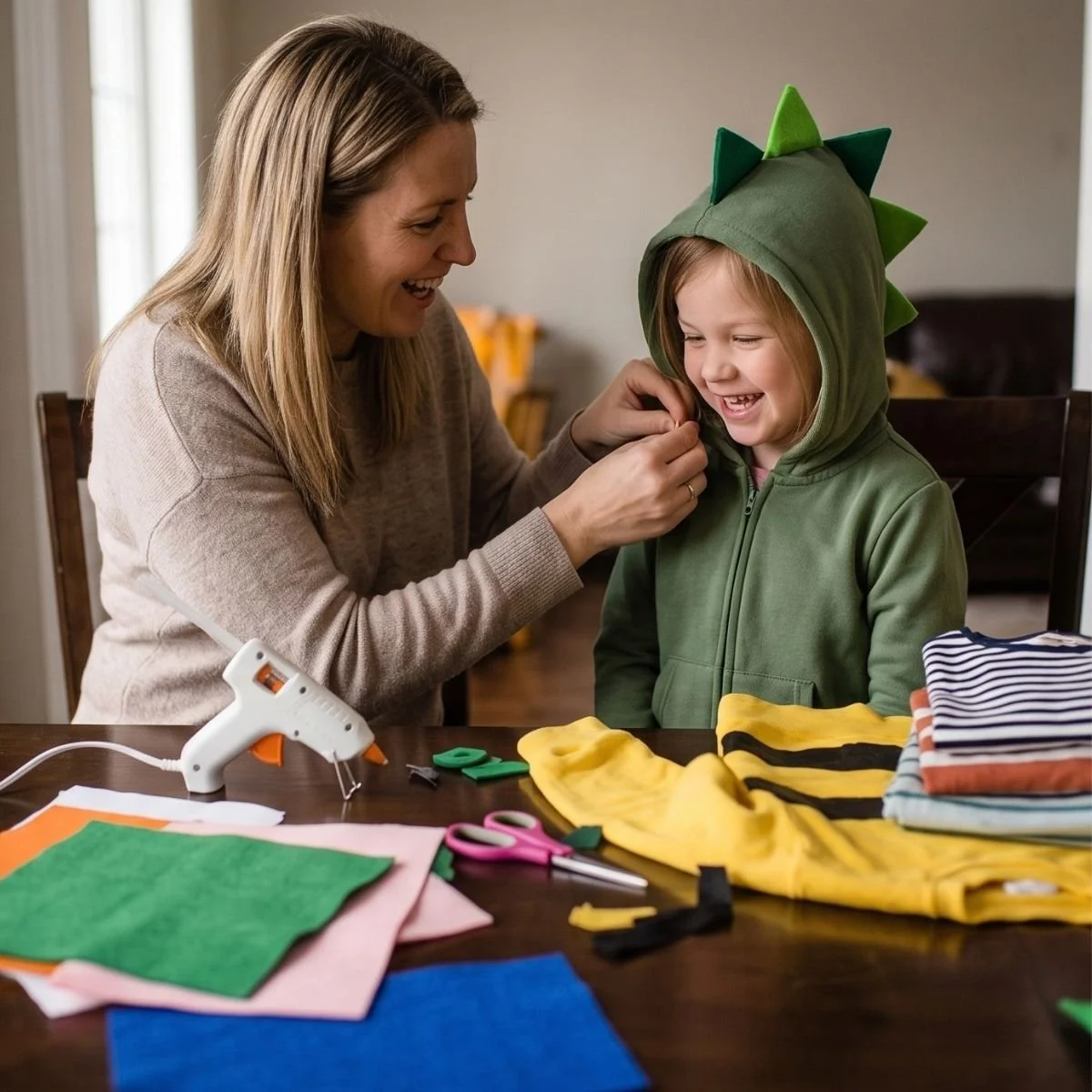
Creating a costume at home gives you complete control over every fabric touching your child's skin. You can source all your base garments at Joe Fresh or Old Navy Canada, and craft supplies at Michael's (Whitby/Oshawa locations) or Dollarama.
| Base Garment | Craft Additions & Supplies DIY | Costume Result | Sensory Benefit |
|---|---|---|---|
| Cozy Zip Hoodie | Cut felt triangles and attach along the hood and spine using fabric glue. | Dinosaur / Dragon | Hood replaces uncomfortable headpieces; familiar sweatshirt feel. |
| Yellow Crewneck Sweatshirt | Wrap black fabric tape or electrical tape around the torso; attach felt antenna to a soft headband. | Bumblebee | Zero restrictive masks; loose waistline. |
| Red & White Striped Tee | Pair with a soft knit beanie and lightweight plastic glasses frames (lenses removed). | Where's Waldo | Wears just like a regular everyday outfit. |
| Solid Fleece Pullover | Glue a soft felt logo/crest (e.g., Superman 'S' or Batman emblem) to the chest. | Superhero | Replaces itchy store-bought polyester jumpsuits with real cotton/fleece. |
| Oversized Sweatshirt | Glue colorful felt pom-poms or felt circles all over the front; pair with red leggings. | Bubblegum Machine | Fun visual impact with zero tight elastic or itchy internal seams. |
| Stroller, Wagon, or Wheelchair | Decorate the frame using lightweight poster board, felt cutouts, or cardboard. | Fire Truck / Spaceship / Pirate Ship | The ultimate low-sensory setup: Child wears their own favorite pajama set inside the structure. |
Creating a costume at home lets you control every fabric touching your child's skin:
The Hoodie Foundation: Start with an ultra-soft hoodie your child already loves wearing. Use fabric glue or double-sided hem tape to attach soft felt spikes, animal ears, or lightweight foam wings directly to the garment.
Wagon & Stroller Wheelchair Wraps: Decorate the child’s stroller, wagon, or wheelchair with poster board cutouts (turning it into a fire truck, spaceship, or pirate ship). The kid wears comfortable everyday clothes inside, while the apparatus provides all the festive visual impact.
3. MODIFY: Altering Store-Bought Favorites
If your child insists on a standard store-bought costume, apply these quick tweaks to eliminate common friction points:
Create a Barrier Layer: Have your child wear a tagless, seamless layer of bamboo or fitted cotton underneath the costume so rough inner seams never touch raw skin.
Iron Over Rough Seams: Slice tags out at the seam line. Apply iron-on bias tape or soft seam-sealing tape over scratchy interior stitching.
Swap Plastic Masks for Soft Caps: Rubber and plastic masks trap heat and cut off peripheral vision. Replace them with soft knit beanies, baseball caps, or cloth hoods with lightweight felt ears sewn on.
Relieve Tight Elastic: Snip tight elastic bands on wrist cuffs or leg openings and leave them open, or cut out zippers and replace them with strip Velcro for easy removal.
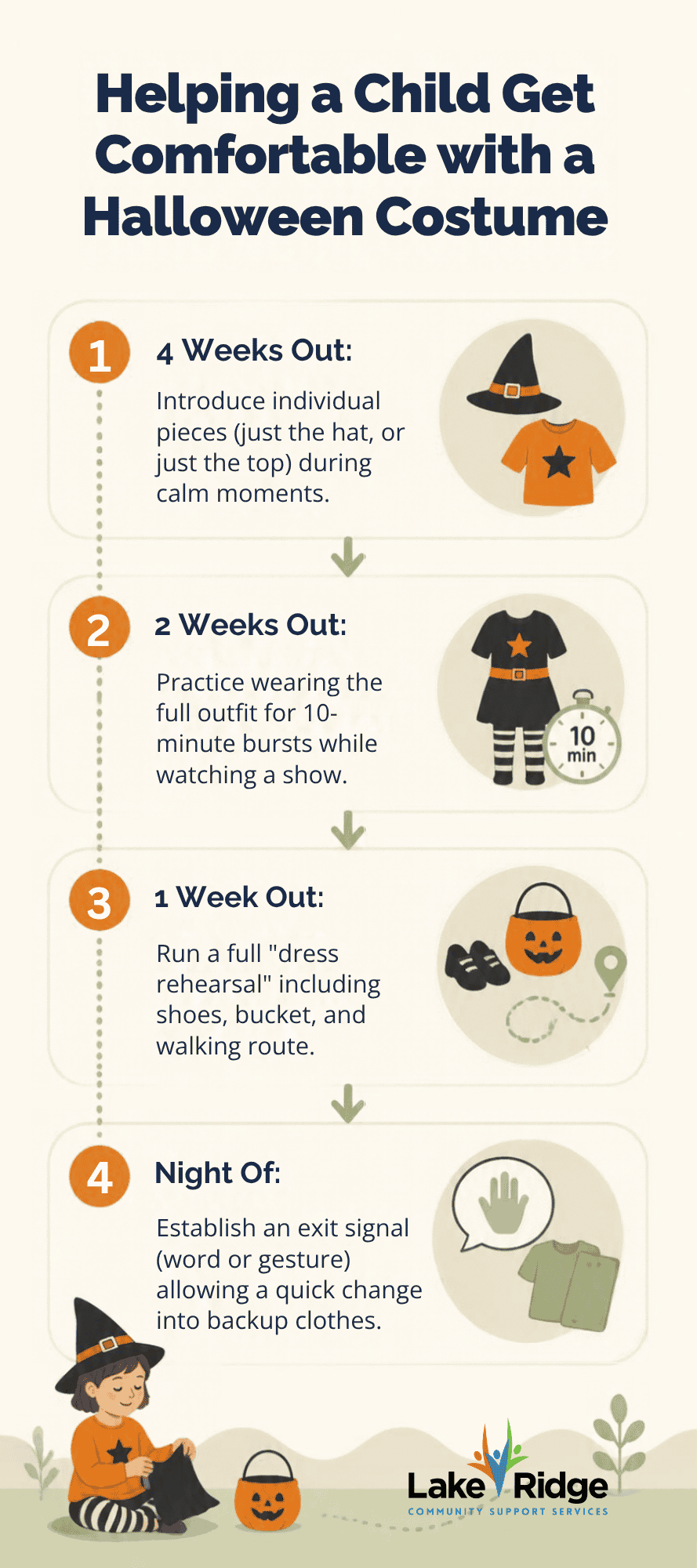
4. DESENSITIZE: Early Prep to Prevent Night-Of Distress
Kids often fall in love with the idea of a costume and how it looks in the package or on a store display. However, if it feels restrictive or uncomfortable when put on right before heading out the door, the disparity between expectations and physical reality can trigger severe distress and disappointment.
To avoid a last-minute crisis when rushing out to trick-or-treat, use this step-by-step dress rehearsal schedule:
Early Try-Ons & Adjustments: Unpack the costume weeks in advance. Let your child try it on while watching a favorite television show or during low-stakes playtime. This gives you time to notice where it scratches, pinches, or pulls so you can make modifications before Halloween night.
Establish a Safe Exit Signal: Teach your child a gesture or codeword they can use if sensory overload hits on the sidewalk.
Pack a Comfort Backup: Bring a backpack containing familiar pajamas or soft sweats on your trick-or-treat route so they can change immediately without feeling like the fun is ruined.
Have a question or another useful hack we should share?
Tell us in the comments.
Retailers & Resource Links
You can source all supplies, base garments, and adaptive options locally across Durham Region (Ajax, Pickering, Whitby, Oshawa) or through fast Canadian shipping:
Ready-To-Buy Adaptive & Sensory Outfits
Walmart Canada - Adaptive Costumes Collection: Sells character lines (Paw Patrol, Disney, Marvel) featuring soft-seam construction and wheelchair accessories. (In-store pickup available at Whitby, Oshawa, and Ajax Supercentres).
HalloweenCostumes.ca - Adaptive Options: Offers accessible adaptive costumes and plush, step-in ride-along outfits.
Amazon.ca - Sensory & Fleece Onesies: Search for "disguise adaptive costume canada" or "kids fleece hooded onesie" for tagless, slip-on options.
Hanna Andersson - Halloween Pajamas: Tagless, organic flat-seam cotton costume sleepwear with direct shipping to Ontario addresses.
DIY Base Garments & Modifying Tools
Joe Fresh / Real Canadian Superstore: Great source for soft cotton hoodies, joggers, and tagless tees.
Michael's Canada: Stock up on fabric glue, felt sheets, foam boards, and velcro strips. (Locations in Whitby and Oshawa).
Dollarama Canada: Affordable poster boards, light cordage, and craft tape for wagon and stroller builds.